Automatic Class 3 training for drivers who will work in automatic trucks
This training is for one situation: you will be driving an automatic-transmission straight truck, and you do not need to learn a manual first. Your practice time goes into steering, tight manoeuvres, backing, the pre-trip inspection and air brakes.
It suits drivers joining an employer whose fleet runs automatic trucks, and learners who have no need for a manual. It comes with one trade-off to understand before you book: passing your road test in an automatic gives you a licence restricted to automatic transmission.
This page explains what the training covers, what that restriction means, who the automatic path fits, and what moving to a manual later involves.
The short version
Pass a commercial road test in an automatic truck and your licence is restricted to automatic transmission. Removing that restriction later means a road test in a manual truck. Confirm the current details with ICBC.
What you can and can’t drive with a Class 3 licence
Class 3 covers straight trucks with three or more axles. Most have air brakes and don’t pull a trailer. Many of these, including fire trucks and garbage trucks, now come with automatic transmissions.
You can drive
- Trucks with more than two axles, such as dump trucks, large tow trucks and tank trucks (fuel, water or propane).
- A tow car towing a vehicle of any weight, and a mobile truck crane.
- Trailers or towed vehicles over 4,600 kg, but only if neither the truck nor the trailer has air brakes.
- Everything a Class 5 allows: cars, vans, two-axle trucks and tow trucks, and motorhomes.
- Air-brake trucks, once the code 15 air brake endorsement is on your licence.
You can’t drive
- Semi-trailer trucks and other tractor-trailer combinations. These need a Class 1.
- A truck or trailer with air brakes towing a trailer over 4,600 kg. That combination needs a Class 1.
- Buses carrying passengers. ICBC puts these in Class 2, or Class 4 for smaller buses of up to 25 people.
- Taxis, limousines, ride-hailing vehicles and ambulances. These need a Class 4.
- Motorcycles. These need a Class 6 (or Class 8 while in the graduated program).
- Any vehicle with air brakes unless the code 15 air brake endorsement is on your licence.
Source: ICBC licence class chart in Driving Commercial Vehicles and icbc.com. Rules can change, so confirm with ICBC.
Trucks you can drive with a Class 3 licence
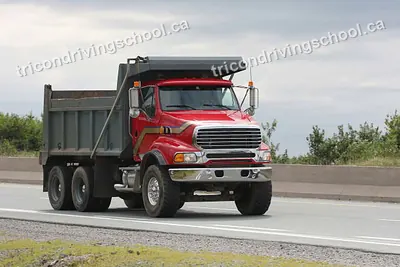
Dump truck 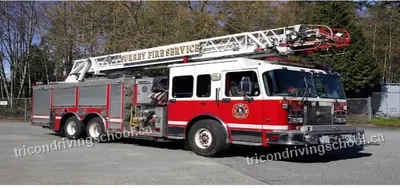
Fire truck 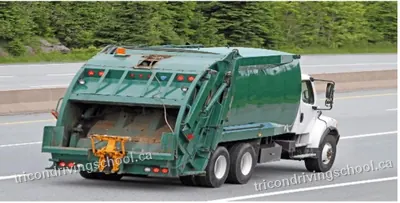
Rear-loader garbage truck 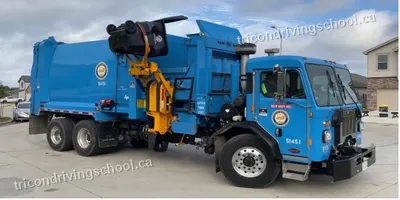
Side-loader garbage truck 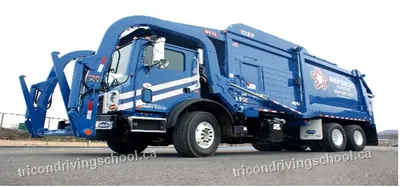
Front-loader garbage truck 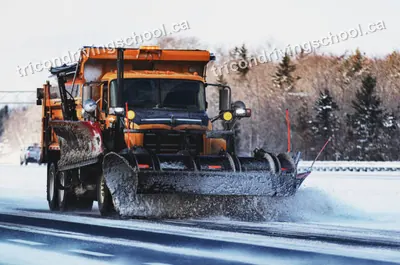
Snow plow truck 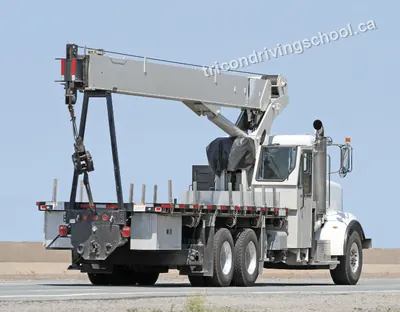
Boom truck 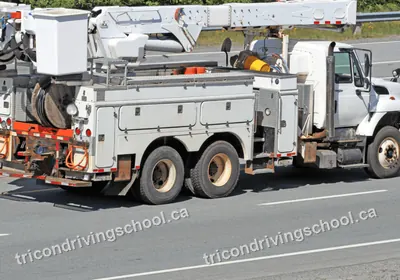
Utility service truck 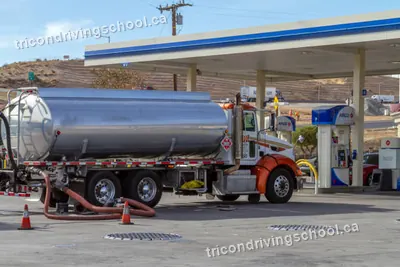
Fuel tank truck 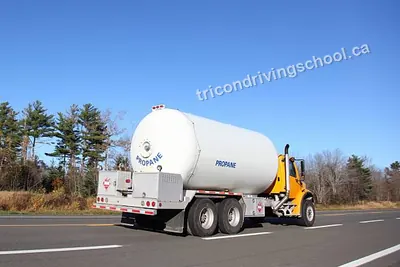
Propane delivery truck 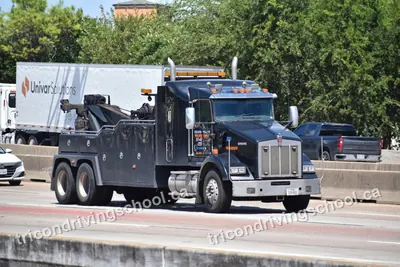
Heavy tow truck 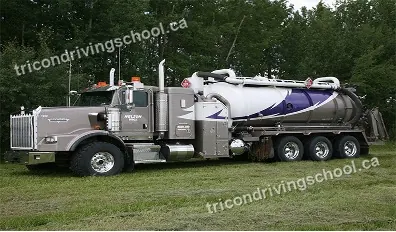
Vacuum tank truck 
Hydrovac truck
What automatic Class 3 training covers
With no clutch or gear changes to manage, the training concentrates on the skills that make a straight truck feel controlled. Talk to us about how your sessions are arranged for your situation.
Steering and vehicle control
Judging the truck's size, turning radius and swing, in traffic and in yards.
Tight manoeuvres
Low-speed turns and positioning in confined spaces, the kind of work a road test and a delivery site both ask for.
Backing
Backing a straight truck with control, using mirrors and checking your surroundings.
Pre-trip inspection
A structured walk-around. See our pre-trip inspection checklist.
Air brakes
Air brake inspection and operation. Many straight trucks use air brakes; see our air brake course for the endorsement side.
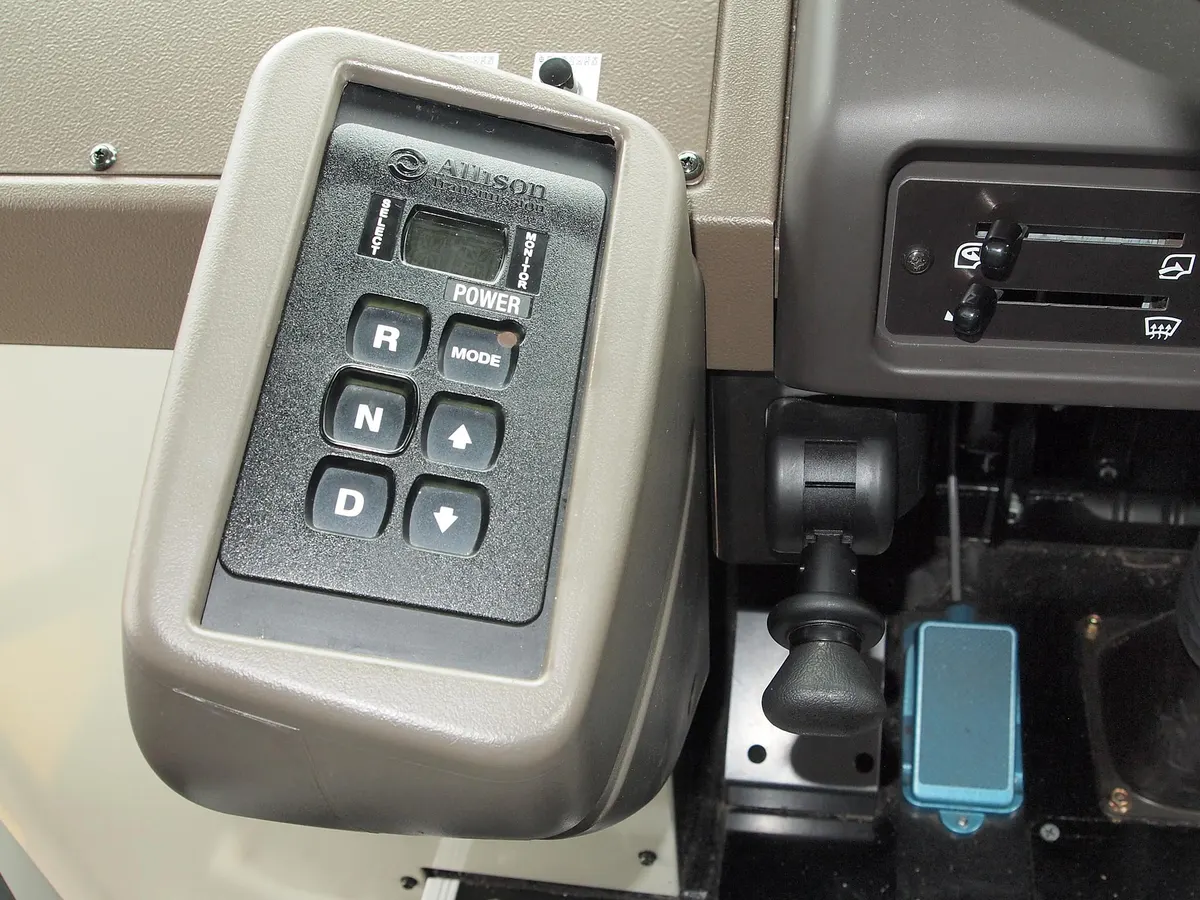


What the automatic-restricted licence means
If you pass a commercial road test in an automatic vehicle, ICBC issues your licence restricted to automatic transmission. The restriction appears on your driver record as code 28. In plain terms, a manual-transmission truck is outside what that licence covers.
That is fine when every truck you will drive is an automatic. It matters the first time an employer hands you a manual truck, or a job posting asks for a manual. Before you choose, find out which trucks you will really be driving, and confirm the details with ICBC's licence restrictions page or by phone.
Who automatic training is for
Automatic training is a sound choice when you know which trucks you will drive. It tends to fit when one of these is true.
Your employer's fleet is automatic
If the company you are joining runs automatic trucks and confirms that is what you will drive, training in an automatic matches the job. Ask them in writing if you can, and include spare and older trucks in the question.
You do not need a manual
If you have no plan to drive a manual truck, there is no need to spend practice time on a clutch and gear changes. That time goes into steering, backing and inspections instead. It is a reasonable choice as long as you make it knowingly.
You are new to straight trucks
A straight truck is bigger, longer and heavier than a car, with air brakes and a longer pre-trip. Learning those first, without a manual gearbox on top, can be a clearer starting point.
Think twice if you are unsure
If you do not yet know which trucks your future employers run, an automatic-restricted licence may narrow your options. In that case look at our Class 3 manual training and manual transmission training pages first.
Moving to a manual later
If your job changes and you need to drive manual trucks, the automatic restriction can be removed, but it takes a road test in a manual truck. Confirm the current process, and anything else ICBC requires for Class 3, with ICBC.
The preparation is the manual driving itself: clutch control, shifting and hill starts. Our manual transmission training page covers that, and our Class 3 manual page explains training on a manual from the start.
Already carrying an automatic-restricted licence?
ICBC sets the retest process, and we cannot change it. Call and tell us what you are driving now and what you want to drive next, and we will talk through how to prepare for a manual.
How to book
Sessions are booked by the hour. If you are starting Class 3 training, tell us early whether you are aiming for automatic or manual so your sessions are planned around it. If you already hold an automatic-restricted Class 3 and want to prepare for a manual, call us and we will work out a plan.
We are open 9am to 9pm every day, including weekends and holidays, from our Surrey and Langley yards.
Tell us your situation
Starting Class 3 and unsure whether automatic fits, or already carrying an automatic-restricted licence? Tell us where you are at and we will talk it through.
How to get your Class 3 licence in B.C.
Whichever transmission you train on, the licensing steps are the same. This is the order ICBC sets.
-
Check you qualify
You must be 18 or older (ICBC needs a parent or guardian’s consent if you’re 18), hold a full-privilege B.C. Class 5 or 6 licence, have fewer than four penalty-point incidents in the past two years, no driving-related criminal convictions in the past three, and no unpaid ICBC fines or debts.
-
Study ICBC’s Driving Commercial Vehicles guide
It is free on icbc.com. The Class 3 study chart includes the air brake chapters.
-
Take the 7-hour air brake theory course
ICBC requires an air brake course (or acceptable proof of air brake experience) before you take the air brake knowledge test. It is not a requirement for the Class 3 knowledge test, but if you plan to take both tests in one visit, do the course first. Our air brake course is 7 hours of theory plus 4 hours of practical. Our in-house air brake practical assessment is only available to students who complete both the theory and the practical training with Tricon.
With us -
Pass your knowledge tests at an ICBC office
Book an appointment. You take the Class 3 knowledge test (35 questions, 28 to pass), the road signs test and the air brake test (25 questions, 20 to pass) on a screen, after a vision check and medical questions. Taking a commercial and the air brake test together costs one fee.
At an ICBC office -
Get your learner’s licence and train
Your learner’s licence is valid for one year and lets you practise driving with a supervisor or at a driving school. This is when your on-road training with us starts.
With us -
Book and pass your road test
Phone ICBC to book (you can’t book a commercial road test online). The test includes a pre-trip inspection, an air brake pre-trip if the truck has air brakes, and the road test. Bring the tools for an air brake adjustment.
At an ICBC office -
Medical form and photo licence
After you pass, you pay the licence fee, get a temporary licence and a Driver’s Medical Examination Report form for your doctor. Your photo licence is mailed once RoadSafetyBC confirms your medical fitness.
Source: ICBC, Driving Commercial Vehicles and icbc.com. Rules and fees can change, so confirm with ICBC before you book.
Class 3 automatic training: frequently asked questions
Is automatic training right if my employer's trucks are all automatic?
It can be. If every truck you will be assigned is an automatic, a licence restricted to automatic transmission may cover your work. Ask your employer to confirm which trucks you will drive, including spares and older units, and confirm the licence details with ICBC before you book your road test.
What will I practise in an automatic truck?
The focus is steering and vehicle control, tight manoeuvres, backing, the pre-trip inspection and air brakes. Because there is no clutch or gear shifting to learn, your practice time goes into those skills.
What can I not drive on an automatic-restricted Class 3 licence?
A licence restricted to automatic transmission does not cover manual-transmission trucks. ICBC records this as a restriction on your licence (code 28). Confirm the exact wording, and what it means for the vehicles you plan to drive, with ICBC.
What if a job later requires a manual truck?
Removing the automatic restriction means a road test in a manual truck. You would want manual practice first, which is what our manual transmission training covers. Confirm the current process and any requirements with ICBC.
I am not sure which trucks I will drive. Should I still choose automatic?
If you do not yet know, ask the employers you are aiming for which trucks they run. If some run manual trucks, or you cannot find out, the manual route keeps more options open. Call us and we will talk through your situation before you commit.
Does an automatic truck change the air brake work?
No. The transmission and the brakes are separate systems. Air brake checks are still part of the pre-trip, and air brake operation is still part of your training. Ask us or ICBC about the air brake endorsement that applies to you.
What are the steps to get a Class 3 licence in B.C.?
Per ICBC: study the Driving Commercial Vehicles guide, pass the knowledge and road signs tests (plus the air brake test if the truck has air brakes) at an ICBC office to get your learner’s licence, practise with a supervisor or a driving school, book and pass the road test, then complete the medical form. The full list is in our step-by-step guide.
Do I have to take the air brake course before the Class 3 knowledge test?
No. ICBC requires an air brake course (or acceptable proof of air brake experience) before the air brake knowledge test, not before the Class 3 knowledge test. If you want to take both tests in one visit (one fee), do the 7-hour air brake course first.
Can I do the air brake assessment at Tricon if I trained somewhere else?
No. Our air brake practical assessment is only available to students who complete both the 7-hour theory and the 4-hour practical training with Tricon. If you trained somewhere else, you can take the air brake pre-trip test with ICBC, or take our full air brake course and do the assessment with us.
Do I need a learner’s licence before my Class 3 training starts?
You need it before you practise driving. ICBC issues the learner’s licence after you pass the knowledge tests and screening, and it allows you to practise with a supervisor or at a driving school. Call us and we will tell you what can start earlier, such as classroom air brake theory.
What can I drive with a Class 3 licence?
ICBC says a Class 3 covers trucks with more than two axles, such as dump trucks and large tow trucks, plus a tow car towing a vehicle of any weight, a mobile truck crane and anything a Class 5 allows. It can tow trailers over 4,600 kg only if neither the truck nor the trailer has air brakes. To drive an air-brake vehicle you also need the code 15 air brake endorsement.
What can’t I drive with a Class 3 licence?
You can’t drive semi-trailer trucks or other tractor-trailer combinations (Class 1), buses carrying passengers (Class 2, or Class 4 for smaller buses), taxis and ambulances (Class 4) or motorcycles (Class 6). You also can’t drive any vehicle with air brakes unless the code 15 endorsement is on your licence.