
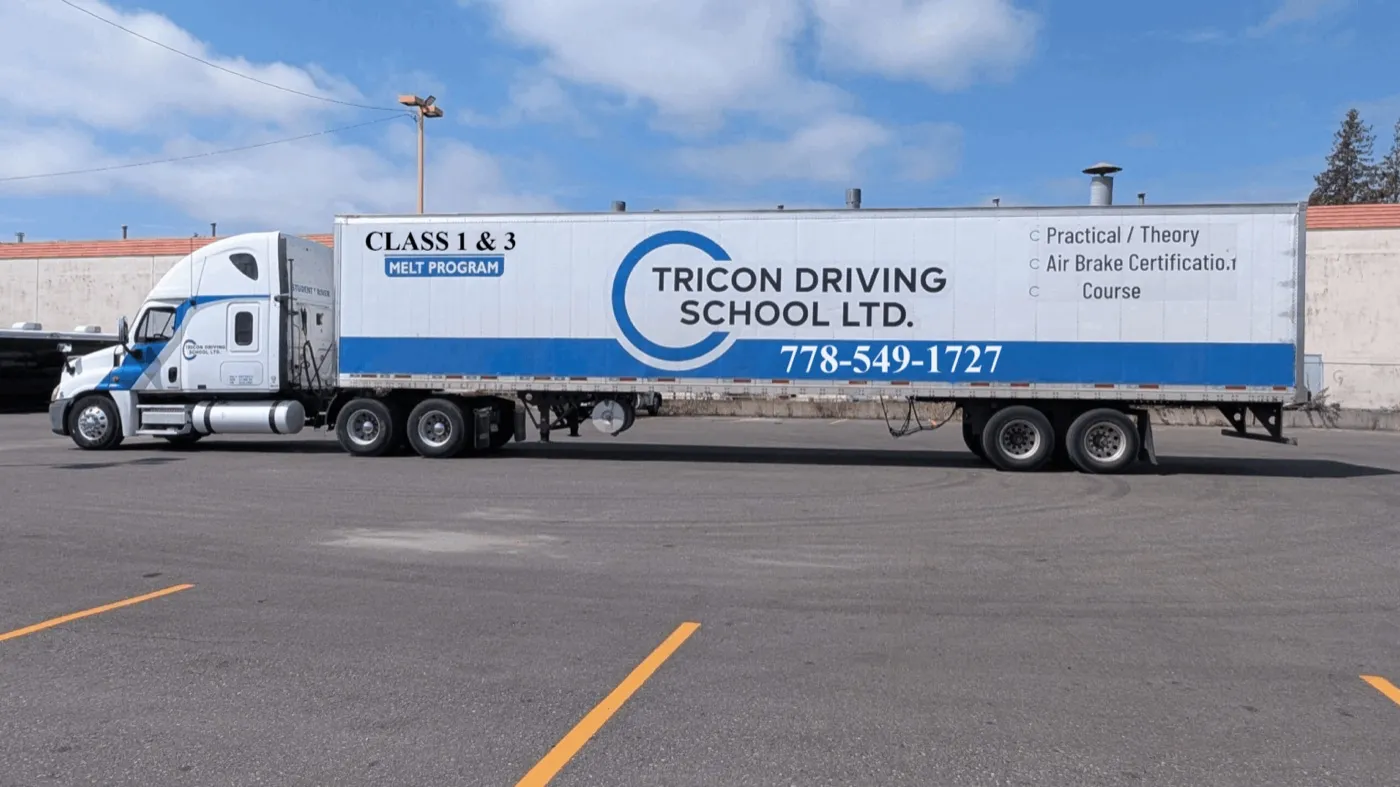
What is a Class 3 licence?
A Class 3 licence lets you drive a straight truck — a single vehicle, not a tractor-trailer combination — with more than two axles or a heavy gross vehicle weight rating. In practice, that's the truck parked on most construction sites and municipal yards in B.C.: dump trucks, hydro trucks, tandem-axle delivery trucks and similar equipment.
It sits between a car licence and a full Class 1. A Class 3 also carries every privilege of a Class 5, so you don't lose anything you already had, and it lets you tow a trailer over 4,600 kg — well past what a Class 5 alone permits. For a lot of drivers it's the licence that actually matches the job: local and regional work that keeps you home most nights, without the 140-hour commitment that a first Class 1 now requires.
Class 3 is not MELT
Mandatory Entry-Level Training only applies to a first B.C. Class 1 licence. There is no ICBC-mandated hour count for Class 3 — how much training you need depends on what you can already do behind the wheel, which is why we assess you rather than sell a fixed package. See what training actually covers.
Who takes Class 3 training
- Firefighter applicants getting the Class 3 with air brakes that fire departments look for before they apply.
- Drivers moving up from a Class 5 into their first commercial licence, often for a construction, hydro, or municipal driving job that's already been offered.
- Drivers who don't want or need Class 1 — the job is a straight truck, not a tractor-trailer, so there's no reason to take on 140 hours of MELT.
- Experienced drivers who need the air brake endorsement added to an existing licence before a specific vehicle or job requires it.
Not sure whether Class 3 or Class 1 is the right fit for the work you want? Call us at (778) 549-1727 and we'll talk through the actual vehicle and route before you commit to either one.
Already Class 3 licensed?
If you just need a few hours of focused practice before a road test, an air brake refresher, or you're an employer wanting a pre-employment driver assessment, see our Class 3 Individual Lessons & Road Tests page instead of the full training program below.
Jobs a Class 3 licence opens
If the job you want is behind the wheel of a big straight truck, it almost certainly needs a Class 3 with an air brake endorsement. These are the drivers we train most often.
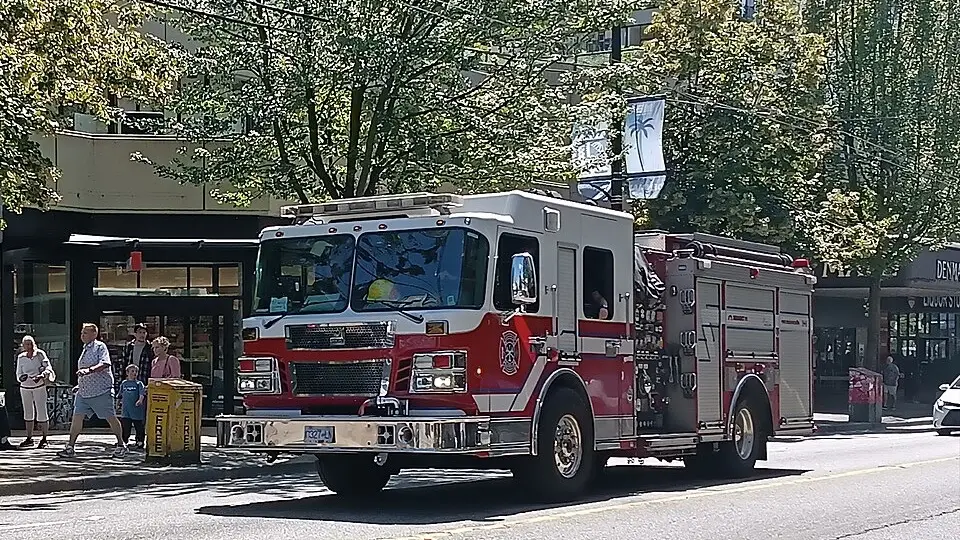
Fire trucks
Most Lower Mainland fire departments ask recruits for a Class 3 with air brakes, some at the application stage. An automatic Class 3 is usually all you need: see Class 3 Automatic.
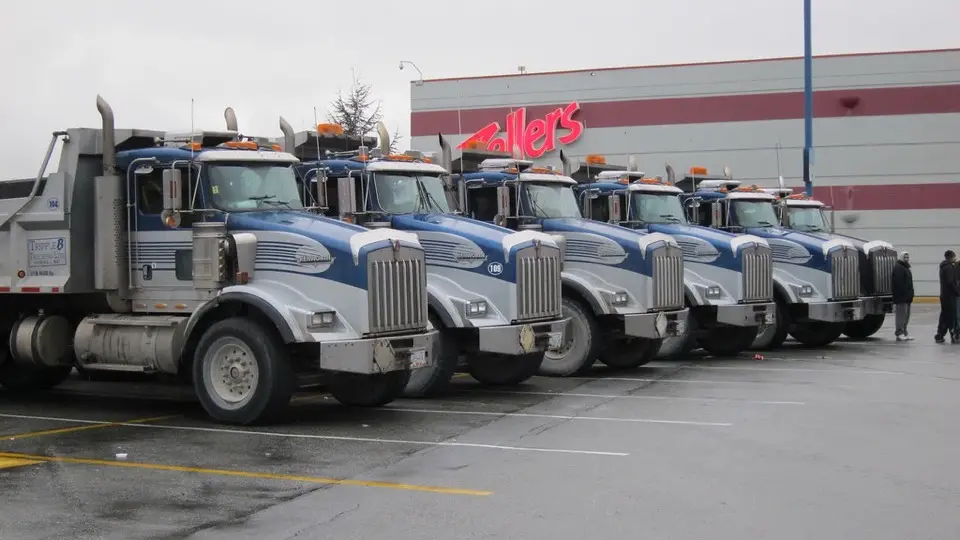
Dump & gravel trucks
Construction, excavation and landscaping crews across the Lower Mainland are always hiring dump truck drivers, and most start you on a tandem straight truck.
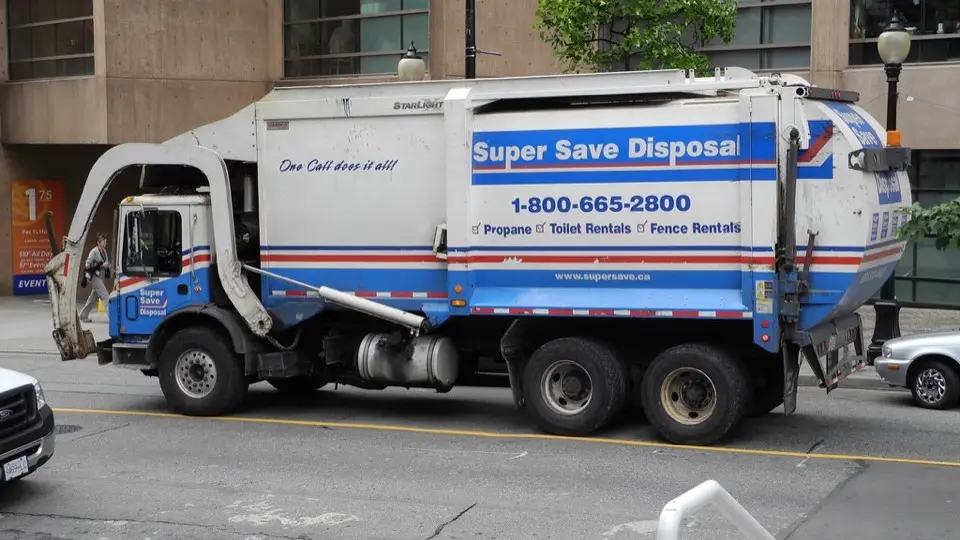
Garbage & recycling trucks
City and private waste-collection routes: steady local shifts, home every night, and year-round work.
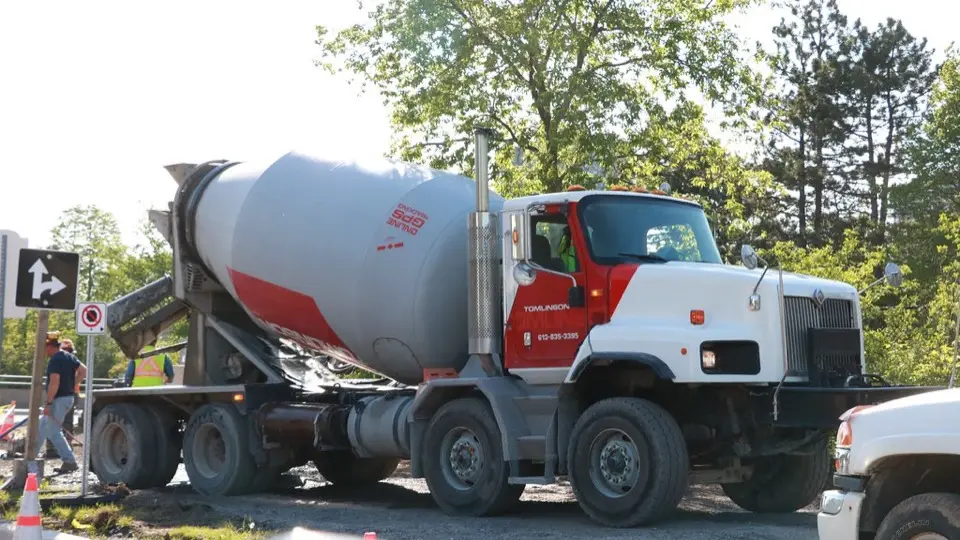
Cement mixers
Ready-mix concrete companies need Class 3 drivers who can handle a heavy, top-loaded truck on job sites and city streets.
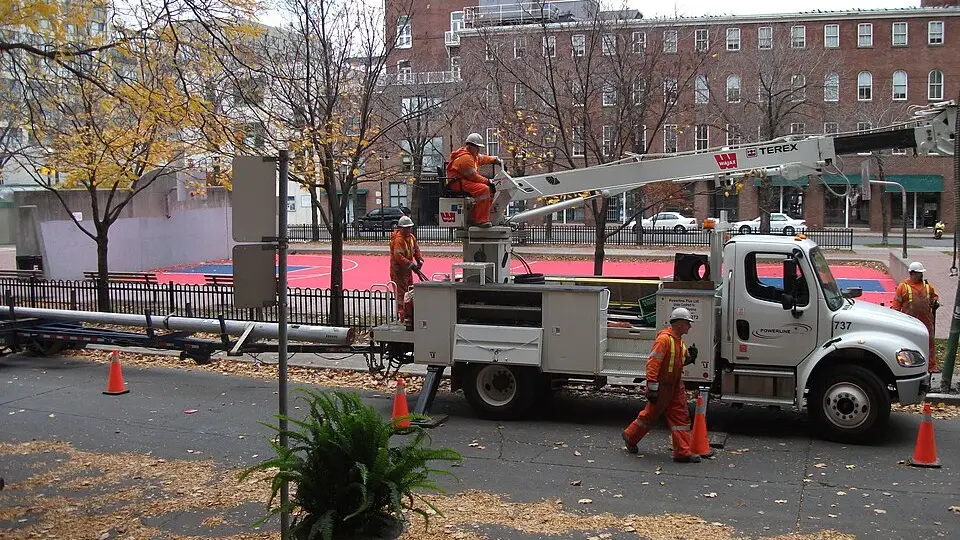
Hydrovac & utility trucks
Hydrovac, bucket and line trucks for utilities, pipeline and municipal contractors. Specialized work that tends to pay near the top of the Class 3 range.
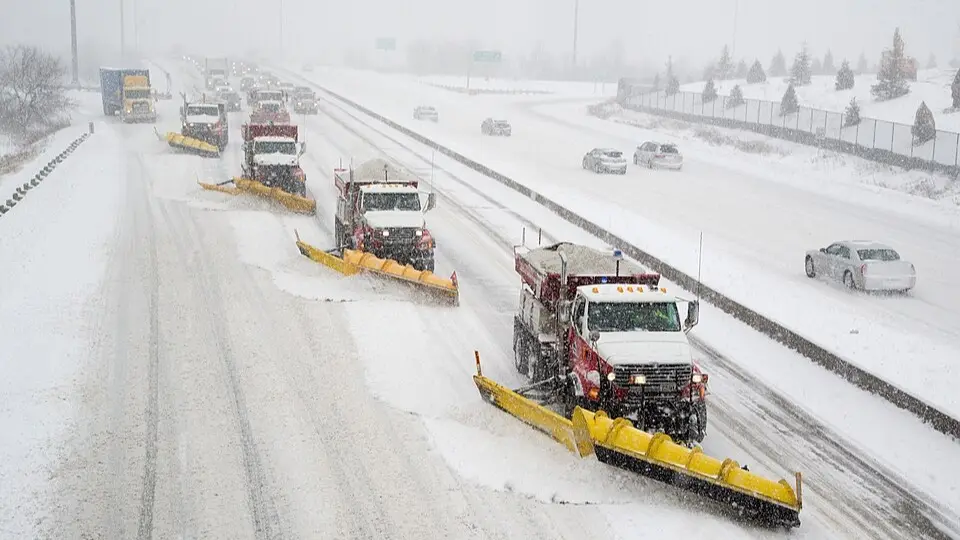
City & public works
Snowplows, sanders, street sweepers and water trucks for municipalities: public-sector jobs with benefits and a pension.
Training for the fire service? Here's the short version.
You need a Class 3 with air brakes, an automatic licence is normally accepted, and you can train evenings and weekends around your current job. Tell us which department you're applying to and we'll plan your training around its deadline. Call (778) 549-1727.
What you can and can’t drive with a Class 3 licence
Class 3 is defined by the vehicle, not the cargo — so the same licence covers a wide range of work as long as the truck itself qualifies.
You can drive
- Trucks with more than two axles, such as dump trucks, large tow trucks and tank trucks (fuel, water or propane).
- A tow car towing a vehicle of any weight, and a mobile truck crane.
- Trailers or towed vehicles over 4,600 kg, but only if neither the truck nor the trailer has air brakes.
- Everything a Class 5 allows: cars, vans, two-axle trucks and tow trucks, and motorhomes.
- Air-brake trucks, once the code 15 air brake endorsement is on your licence.
You can’t drive
- Semi-trailer trucks and other tractor-trailer combinations. These need a Class 1.
- A truck or trailer with air brakes towing a trailer over 4,600 kg. That combination needs a Class 1.
- Buses carrying passengers. ICBC puts these in Class 2, or Class 4 for smaller buses of up to 25 people.
- Taxis, limousines, ride-hailing vehicles and ambulances. These need a Class 4.
- Motorcycles. These need a Class 6 (or Class 8 while in the graduated program).
- Any vehicle with air brakes unless the code 15 air brake endorsement is on your licence.
Source: ICBC licence class chart in Driving Commercial Vehicles and icbc.com. Rules can change, so confirm with ICBC.
Almost every Class 3 vehicle has air brakes
Which means almost every Class 3 driver needs the air brake endorsement too. Rather than treat it as a separate errand, we build it into your Class 3 training — see what's covered below, or take air brakes on its own through our standalone air brake course if that's all you need.
What Class 3 training covers
Because there's no fixed MELT curriculum for Class 3, we build your training around the truck you'll actually drive and the ground you're starting from. A driver who's spent years around trucks needs less time than someone coming straight from a car licence — but every student covers the same ground before we call them road-test ready.
Vehicle systems & controls
The controls, gauges and mechanical systems on a straight truck — what's different from the car you've been driving, and what to check before you ever start the engine.
Pre-trip inspection
The NSC 13 pre-trip inspection component by component, the same standard ICBC tests you on for the road test.
Air brake systems
How an air brake system works, pre-trip and en-route inspection, identifying defects, and checking and adjusting pushrod travel — the material behind the air brake endorsement.
Backing & manoeuvring
Straight-line and offset backing, turning wide without swinging into the next lane, and judging a truck's length and blind spots from the driver's seat.
On-road driving
City and highway driving in a Class 3 vehicle — space management, braking distance and load awareness — building toward the exact route style ICBC's road test uses.
Professional driving habits
Defensive driving, hazard perception, and the basics of cargo securement — enough to keep a load, and everyone around your truck, safe.
How long will it actually take?
There's no honest single answer — it depends on your comfort behind a larger vehicle and how much time you can put in each week. We'll give you a realistic estimate for your situation on the phone, before you book anything.
Before you can enrol
Class 3 has its own eligibility rules, separate from — and in one case looser than — Class 1's.
- Be at least 18 years old. That's a year younger than the Class 1, 2 or 4 minimum.
- Hold a full-privilege B.C. Class 5 or 6 licence (or an out-of-province equivalent). A Class 7 novice licence doesn't qualify.
- Pass the Class 3 knowledge test and road signs test. The knowledge test is 35 multiple-choice questions from ICBC's Driving Commercial Vehicles guide, with 28 correct needed to pass and 45 minutes to do it. Practise with our free commercial practice test.
- Add the air brake knowledge test if your training vehicle has air brakes, which almost all Class 3 trucks do. ICBC requires an air brake course (or proof of air brake experience) before that test.
- Meet the commercial medical standard. ICBC checks your vision and asks health questions when you apply for your learner's licence. After your road test you get a Driver's Medical Examination Report form for your doctor, and RoadSafetyBC reviews it.
- Have a clean enough record. Fewer than four penalty-point incidents on your Class 5 in the past two years.
Not sure where you stand on any of these? That's a five-minute phone call, and it's free. (778) 549-1727.
Your path to a Class 3 licence
From your first phone call to a licence in your wallet, here is the sequence as ICBC sets it, and where we come in.
-
Check you qualify
You must be 18 or older (ICBC needs a parent or guardian’s consent if you’re 18), hold a full-privilege B.C. Class 5 or 6 licence, have fewer than four penalty-point incidents in the past two years, no driving-related criminal convictions in the past three, and no unpaid ICBC fines or debts.
-
Study ICBC’s Driving Commercial Vehicles guide
It is free on icbc.com. The Class 3 study chart includes the air brake chapters.
-
Take the 7-hour air brake theory course
ICBC requires an air brake course (or acceptable proof of air brake experience) before you take the air brake knowledge test. It is not a requirement for the Class 3 knowledge test, but if you plan to take both tests in one visit, do the course first. Our air brake course is 7 hours of theory plus 4 hours of practical. Our in-house air brake practical assessment is only available to students who complete both the theory and the practical training with Tricon.
With us -
Pass your knowledge tests at an ICBC office
Book an appointment. You take the Class 3 knowledge test (35 questions, 28 to pass), the road signs test and the air brake test (25 questions, 20 to pass) on a screen, after a vision check and medical questions. Taking a commercial and the air brake test together costs one fee.
At an ICBC office -
Get your learner’s licence and train
Your learner’s licence is valid for one year and lets you practise driving with a supervisor or at a driving school. This is when your on-road training with us starts.
With us -
Book and pass your road test
Phone ICBC to book (you can’t book a commercial road test online). The test includes a pre-trip inspection, an air brake pre-trip if the truck has air brakes, and the road test. Bring the tools for an air brake adjustment.
At an ICBC office -
Medical form and photo licence
After you pass, you pay the licence fee, get a temporary licence and a Driver’s Medical Examination Report form for your doctor. Your photo licence is mailed once RoadSafetyBC confirms your medical fitness.
Not sure which step you're on?
Tell us what's on your licence today and we'll map out exactly what's left — no obligation, no sales pitch.
Why train with Tricon
Class 3 training isn't standardised the way MELT is, so the school you pick matters even more here — it decides how thorough your pre-trip and air brake training actually are.
Air brakes built in, not bolted on
We treat the air brake endorsement as core to Class 3, not an upsell — most of our students need it, so it's part of the same course.
Instructors who have done the job
Our instructors have driven commercially themselves, so pre-trip and inspection training comes with the reasoning behind it, not just the checklist.
Open 9am to 9pm, every day
Including weekends and holidays. Most Class 3 students are training around a job offer with a start date, so we work around your schedule, not ours.
Yards in Surrey and Langley
Two Metro Vancouver training yards, plus a third location in Duncan/Nanaimo, so your backing practice isn't a 90-minute commute each way.
4.6★ Surrey · 5.0★ Langley on Google
By drivers who now hold a commercial licence. We're a BC Trucking Association member school with an established record of training new drivers.
In-house funding available
We finance training directly as well as helping students apply for provincial grants — so the course fee doesn't have to arrive as one lump sum.
We train Class 3 students from across Metro Vancouver and the Fraser Valley — Surrey, Langley, Delta, Abbotsford, Burnaby, Richmond, Coquitlam and New Westminster.
Paying for your Class 3 training
ICBC does not set the price of driver training — every approved school sets its own, which is why quotes vary across the province. We quote current Class 3 pricing over the phone based on how much training your experience actually needs, rather than a flat package price.
You may not have to carry the full cost yourself. Several provincial programs exist specifically to get new drivers into the trucking and heavy-vehicle industries:
Community Workforce Response Grant
Provincial funding aimed at filling skills gaps in local labour markets — commercial driving is a recurring priority.
Skill Enhancement Training Grant
Support for individuals training toward in-demand occupations in British Columbia.
Indigenous Skills Training Development Fund
Dedicated training funding for Indigenous learners across B.C.
B.C. Employer Training Grant
If an employer is willing to sponsor you, this covers a large share of the cost of training a new driver.
In-house funding at Tricon
We also finance training directly, so you can start before the whole fee is in the bank. Ask about it when you call — and see our funding options page for the full picture.
Class 3 — frequently asked questions
Do I need a Class 3 licence to be a firefighter in B.C.?
Most Lower Mainland fire departments ask firefighter recruits for a valid B.C. Class 3 licence with an air brake endorsement. Some want it when you apply; others let you apply first but need it before the interview or job offer. Fire trucks are heavy straight trucks with air brakes, and there is no general exemption for firefighters driving on public roads. Always check the posting for the department you're applying to. Getting your Class 3 early means you meet the requirement from day one.
Will fire departments accept an automatic (restricted) Class 3?
In most cases, yes. If you take your ICBC road test in an automatic truck, your Class 3 is restricted to automatic transmissions. Modern fire apparatus are automatic, and departments such as Burnaby specifically ask for a Class 3 for automatic vehicles. If you also want to drive older manual dump trucks or other manual equipment, train and test on a manual. Tell us your goal and we'll recommend the right one.
I work full-time. Can I train in the evenings?
Yes. We're open 9am to 9pm every day, including weekends, so you can train around your current job and switch careers without quitting first. In-house funding is also available if the upfront cost is holding you back.
What can you drive with a Class 3 licence in BC?
A single (non-articulated) truck with more than two axles or a heavy gross vehicle weight rating — the straight trucks used as dump trucks, hydro trucks, and construction and municipal vehicles. It also covers towing a trailer over 4,600 kg, and every vehicle already covered by a Class 5 licence.
It does not cover a tractor-trailer combination with a fifth wheel — that's Class 1 — or buses, which need a Class 2.
Is MELT required for Class 3?
No. Mandatory Entry-Level Training applies only to a first B.C. Class 1 licence. There's no ICBC-mandated minimum number of training hours for Class 3 — which is exactly why we assess each student individually rather than sell a fixed-hour package.
Do I need air brake training for Class 3?
Almost always. Most Class 3 vehicles are equipped with air brakes, so you'll need the endorsement: complete an approved air brake course (or demonstrate equivalent experience), then pass the ICBC air brake knowledge test, and do an air brake pre-trip inspection as part of your road test on a single-unit vehicle.
We build this into Class 3 training rather than treating it as a separate purchase. If you already hold Class 3 and only need the endorsement, our standalone air brake course covers it on its own.
What licence do I need before starting Class 3 training?
A full-privilege B.C. Class 5 or 6 licence — a Class 7 novice licence isn't enough. From there you apply for a Class 3 learner's licence, which requires passing the ICBC Class 3 knowledge test (35 multiple-choice questions from the Driving Commercial Vehicles guide, 28 to pass) and the road signs test, plus the air brake knowledge test if you're adding that endorsement at the same time.
How old do you have to be for a Class 3 licence?
18. That's a year younger than the minimum for a Class 1, 2 or 4 licence, which is one reason Class 3 is often the first commercial licence a driver earns.
What does the Class 3 road test involve?
It's taken in a Class 3 vehicle and opens with a pre-trip inspection — including the air brake system, if your truck has one — before the on-road driving portion. ICBC is assessing vehicle control and manoeuvring as much as it is your driving; the pre-trip trips up more first-time candidates than the road portion does.
Do I need a medical exam for a Class 3 licence?
Yes. Class 3 is a commercial licence class, so you'll need a Driver's Medical Examination Report (DMER) completed by your physician and reviewed by RoadSafety BC, along with a vision test, before your licence is issued.
Can a Class 3 licence tow a trailer?
Yes — Class 3 covers towing a trailer over 4,600 kg, which is past what a Class 5 alone allows. Whether air brakes are required on that combination depends on the specific trailer and vehicle configuration; we'll walk you through your setup on the phone.
How much does Class 3 training cost?
ICBC doesn't set a price — each school quotes its own, and because there's no fixed hour count for Class 3, the right number of hours (and the price) depends on your starting experience. Call us at (778) 549-1727 for an honest estimate, and ask about in-house financing and the provincial grants listed above.
Should I get Class 3 or go straight for Class 1?
It comes down to the vehicle, not ambition. If the job is a straight truck — dump truck, hydro truck, delivery truck — Class 3 is the correct licence and there's no reason to take on Class 1's 140-hour MELT requirement. If the job is a tractor-trailer, you need Class 1, and Class 3 experience won't reduce those hours. Tell us the job and we'll tell you the licence.
Where do you run Class 3 training?
From our Surrey yard at 12511 82 Ave and our Langley yard at 8380 216 St, with students coming from across Metro Vancouver and the Fraser Valley — Delta, Abbotsford, Burnaby, Richmond, Coquitlam and New Westminster included.
We answer the phone from 9am to 9pm every day of the year, weekends and holidays included.
What are the steps to get a Class 3 licence in B.C.?
Per ICBC: study the Driving Commercial Vehicles guide, pass the knowledge and road signs tests (plus the air brake test if the truck has air brakes) at an ICBC office to get your learner’s licence, practise with a supervisor or a driving school, book and pass the road test, then complete the medical form. The full list is in our step-by-step guide.
Do I have to take the air brake course before the Class 3 knowledge test?
No. ICBC requires an air brake course (or acceptable proof of air brake experience) before the air brake knowledge test, not before the Class 3 knowledge test. If you want to take both tests in one visit (one fee), do the 7-hour air brake course first.
Can I do the air brake assessment at Tricon if I trained somewhere else?
No. Our air brake practical assessment is only available to students who complete both the 7-hour theory and the 4-hour practical training with Tricon. If you trained somewhere else, you can take the air brake pre-trip test with ICBC, or take our full air brake course and do the assessment with us.
Do I need a learner’s licence before my Class 3 training starts?
You need it before you practise driving. ICBC issues the learner’s licence after you pass the knowledge tests and screening, and it allows you to practise with a supervisor or at a driving school. Call us and we will tell you what can start earlier, such as classroom air brake theory.
What can I drive with a Class 3 licence?
ICBC says a Class 3 covers trucks with more than two axles, such as dump trucks and large tow trucks, plus a tow car towing a vehicle of any weight, a mobile truck crane and anything a Class 5 allows. It can tow trailers over 4,600 kg only if neither the truck nor the trailer has air brakes. To drive an air-brake vehicle you also need the code 15 air brake endorsement.
What can’t I drive with a Class 3 licence?
You can’t drive semi-trailer trucks or other tractor-trailer combinations (Class 1), buses carrying passengers (Class 2, or Class 4 for smaller buses), taxis and ambulances (Class 4) or motorcycles (Class 6). You also can’t drive any vehicle with air brakes unless the code 15 endorsement is on your licence.