
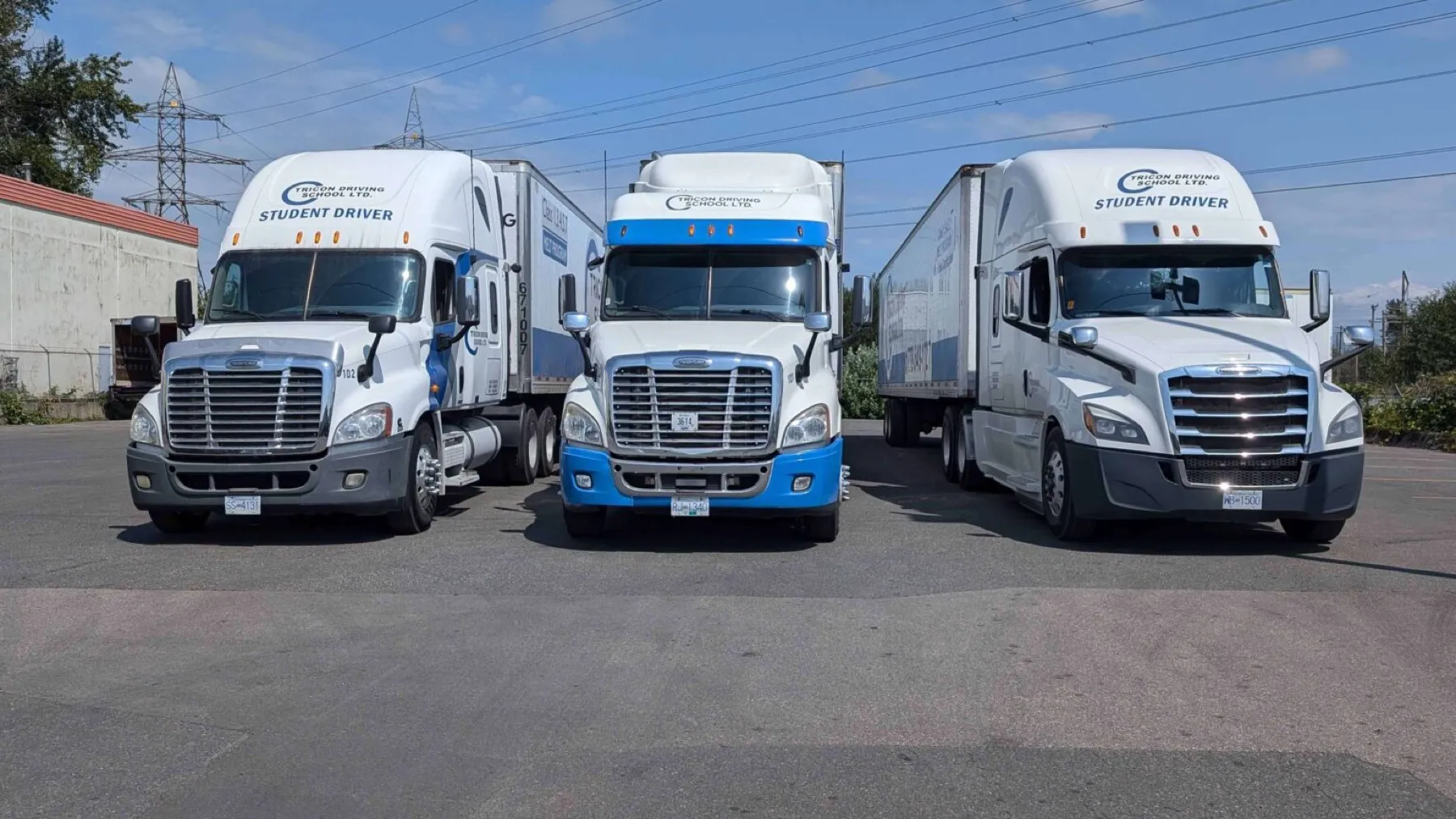
What the BC Employer Training Grant actually is
The BC Employer Training Grant (often shortened to ETG-B) is a provincial cost-share program that helps British Columbia employers pay for job-related training for their staff. For commercial driving, that means an employer — a carrier, a fleet, a logistics company — can get a large share of a Class 1 MELT, Class 3 or air brake course covered when they are the ones putting a driver through training.
It is not a program an individual applies for on their own. It is employer-driven: your employer (or the company about to hire you) submits the application, and the training has to serve a real job they have for you. That single fact shapes almost everything else about how it works.
Tricon doesn't administer this grant
The Province of British Columbia runs the BC Employer Training Grant through WorkBC, not us. What we do is confirm the training details an employer needs to apply, provide the invoices and paperwork for a claim, and tell you honestly whether the numbers and timing look realistic for your situation. Call (778) 549-1727 and we'll walk through it.
Who qualifies
Eligibility runs on two tracks — the employer has to qualify, and so does the training and the participant. Both need to line up.
Employer eligibility
- A private-sector or not-for-profit employer operating in B.C., with a genuine business need for the training.
- A real job for the participant, either an existing employee moving into commercial driving or a confirmed new hire.
- Willing to share the cost, since the grant reimburses a portion rather than the full amount.
- Able to apply and get approval before the training start date — the single most common thing that trips employers up.
Participant eligibility
- Legally entitled to work in Canada and ordinarily resident in British Columbia.
- Training toward a job-relevant credential, which Class 1 MELT, Class 3 and air brake certification all are.
- Can be a current employee or a new hire — the grant covers both directions, as long as the employer is sponsoring it.
The rule that catches people out
Training generally can't start before the employer's application is approved — starting early can make the whole course ineligible. If your start date can't wait on WorkBC's timeline, ask us about in-house funding to bridge the gap instead.
What it covers — and what it doesn't
The grant is aimed squarely at the cost of the training itself, not everything around it. Rules and exact coverage are set by the province and do shift over time, so treat the following as the general shape rather than a guarantee for your situation — confirm specifics with WorkBC when your employer applies.
Typically covered
Eligible tuition and training fees paid to an approved training provider like Tricon, for a course that leads to a job-relevant credential.
Typically not covered
ICBC's own testing and licensing fees, wages paid while an employee is off the job training, and travel, accommodation or living costs.
See course fees & what's included for the full breakdown of what a Tricon course fee does and doesn't cover, separate from any grant.
Tricon training that fits the grant
These are the Tricon programs most often put through the BC Employer Training Grant, because each one leads to a commercial credential tied directly to a job.
Class 1 (MELT)
The full 140-hour Mandatory Entry-Level Training required for a Class 1 licence — the standard route into long-haul and heavy commercial driving.
See Class 1 trainingClass 3
Commercial training for straight trucks and smaller commercial vehicles, a common fit for local and regional delivery roles.
See Class 3 trainingAir Brake Course
The standalone air brake endorsement for employees who already hold a licence but need the certification a role requires.
See the air brake courseHow to apply, step by step
The application itself sits with your employer, but the sequence below is the same one we walk every employer and student through.
Confirm the employer situation
Establish who is sponsoring the training and which program fits the job — current employee upgrading, or a confirmed new hire.
Employer applies through WorkBC
The employer submits the ETG application and waits for approval before the training start date. This is the step that decides eligibility.
Confirm your Tricon start date
Once approval is in place, or clearly on its way, lock in a start date for the course.
Complete training and claim reimbursement
Tricon provides the invoices and completion paperwork, and the employer submits its claim to WorkBC for the approved share.
Not sure if the timing works?
Tell us your start date and where your employer's application stands. We'll tell you honestly whether ETG will be ready in time, or whether in-house funding should bridge the gap.
BC Employer Training Grant — frequently asked questions
Can I apply for the BC Employer Training Grant myself, without an employer?
No. The BC Employer Training Grant is applied for by the employer, not the individual — it requires a sponsoring B.C. employer with a job in mind for you, current or new hire. If you don't have an employer behind you, ask us about in-house funding and the other individual-focused provincial programs instead, on our funding page.
How much does the BC Employer Training Grant cover?
Up to 80% of eligible training costs, to a maximum of $10,000 per participant, with the employer covering the remainder as a cost-share. Exact percentages, caps and intake windows are set by the Province of British Columbia and can change, so confirm current figures with WorkBC before an employer applies.
Does my employer have to apply before I start training?
Yes, this is the rule that catches the most people out. Training generally needs to start on or after the date the employer's application is approved — starting early can make the training ineligible. If timing is tight, our in-house funding can get you started while an application is still moving.
Which Tricon programs qualify for the BC Employer Training Grant?
Class 1 MELT, Class 3 and the air brake course are all commercial credentials tied directly to employment, which is the kind of training the grant is designed for. Eligibility is still confirmed case by case through the employer's WorkBC application, not guaranteed by us in advance.
Does the grant cover ICBC's testing and licensing fees?
Generally no. The Employer Training Grant is aimed at eligible training costs paid to the training provider. ICBC's own fees for knowledge tests, the learner's licence and the road test are paid directly to ICBC and are not part of a training invoice. See course fees & what's included for the full picture of what is and isn't included in a Tricon course.
Can I combine the Employer Training Grant with Tricon's in-house funding?
Often, yes. In-house funding can hold your seat and get you started while an employer's ETG application is still with WorkBC, and the grant's share can be applied once it's approved and claimed. We help students and employers structure this regularly — call and we'll work out what fits your timeline.
Who actually administers the BC Employer Training Grant?
The Province of British Columbia, through WorkBC — not Tricon. We don't decide or process applications. What we do is confirm the training details an employer needs for their application, provide the invoices and completion documents for a claim, and tell you honestly whether the timing and eligibility look realistic.